

Recently I read an essay on the idea of Home - where the author concluded, “There is no place like Home.” The author had visited the United States for a holiday, spending time with family & friends, and after a fortnight of making memories, the time to return to India had arrived.
The author soon returned to their homeland to be with family, to enjoy the convenience and simple luxuries that life in India afforded, and above all, the feeling of belonging. The author’s identity was very much sealed in the country of their birth. The author opined that despite the raw beauty and warmth of the United States, home was very much elsewhere.
I agree with the author in many ways. Similar to them, I also began my life’s journey in India. However, my path was a little different. What began in India took a turn toward the Middle East, returning to my Dravidian roots for a time before I made the long journey to the West and started a season of life in the USA. For over two decades, my life has grown roots, flourished, and thrived in America.
But I have constantly wondered where my “Home” is.
My husband and I watched Christopher Nolan’s The Odyssey earlier this week. Homer’s original poem, one of the oldest surviving works of literature, is not really a story of adventure but the journey of a king returning home after a ten-year-long Trojan War. Although Odysseus & his crew encounter numerous challenges, Homer details the additional ten-year journey it takes for Odysseus to return home.
Without going into the details of Homer’s epic, the main theme of The Odyssey is that Odysseus wants to return home. He has been away for two decades, and for him, home is no longer merely geographical - a place he can return to and belong as if he had never left. Home became a test, a search for identity that he left behind, a prize or perhaps a gift. All of those emotions seem to be entangled in Odysseus. He could not even walk back in and reveal his identity to the ones he loved so dearly, the very ones he longed to return to. Was he reluctant to reveal himself, and the conflict he felt over Troy, or was it just survival instinct? The need for some form of self-preservation before he could shed the disguise and be himself.
After all, a lot happens in 20 years.
Home means different things to different people—a place where you can be wholly yourself with no reservations. Belonging, identity, being seen and known are all wrapped up in a warm bundle of emotions that you embrace. But sometimes the idea of Home is almost porous- places, people, memories, aromas, sensations - they often hit you with an overwhelming sense of nostalgia that can occasionally bring tears, tears of joy, sadness, longing, everything all at once, that it is almost too much to bear.
For some of us, Home is Bifurcated.
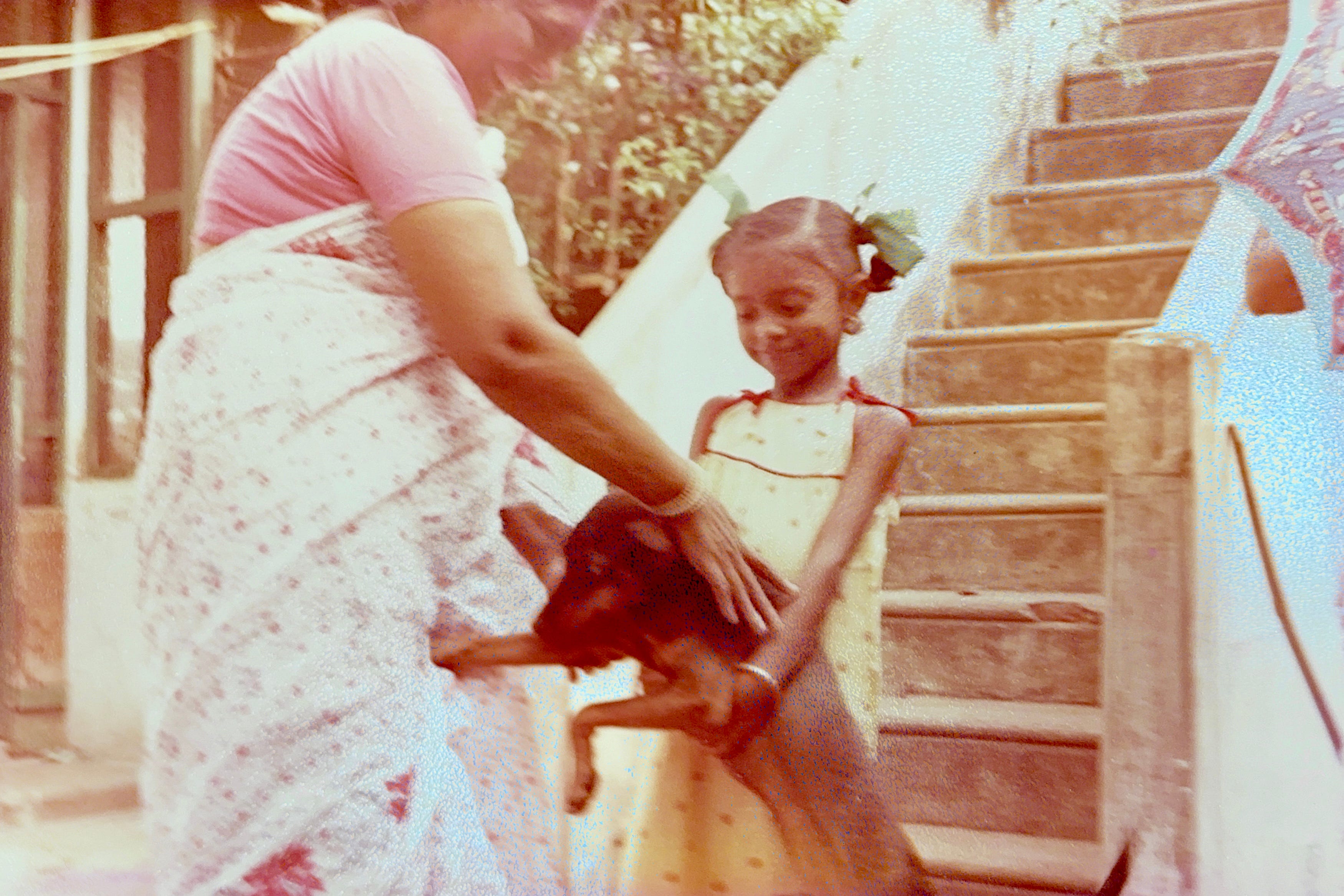
I began my journey in Chennai, India. But within the first 4 years of my life, we had moved to Oman, where I spent the majority of my formative years.
The first time I left Oman on a flight to India for college, hot tears spilled over my cheeks as I saw the lights of the Sultanate of Oman fading behind me. I knew then, when I returned, it would never feel like home again. The country, the city, the people, and the memories I had made for nearly 14 years had officially come to an end. I would go back on summer vacations and even had my firstborn there, but it was no longer the same.
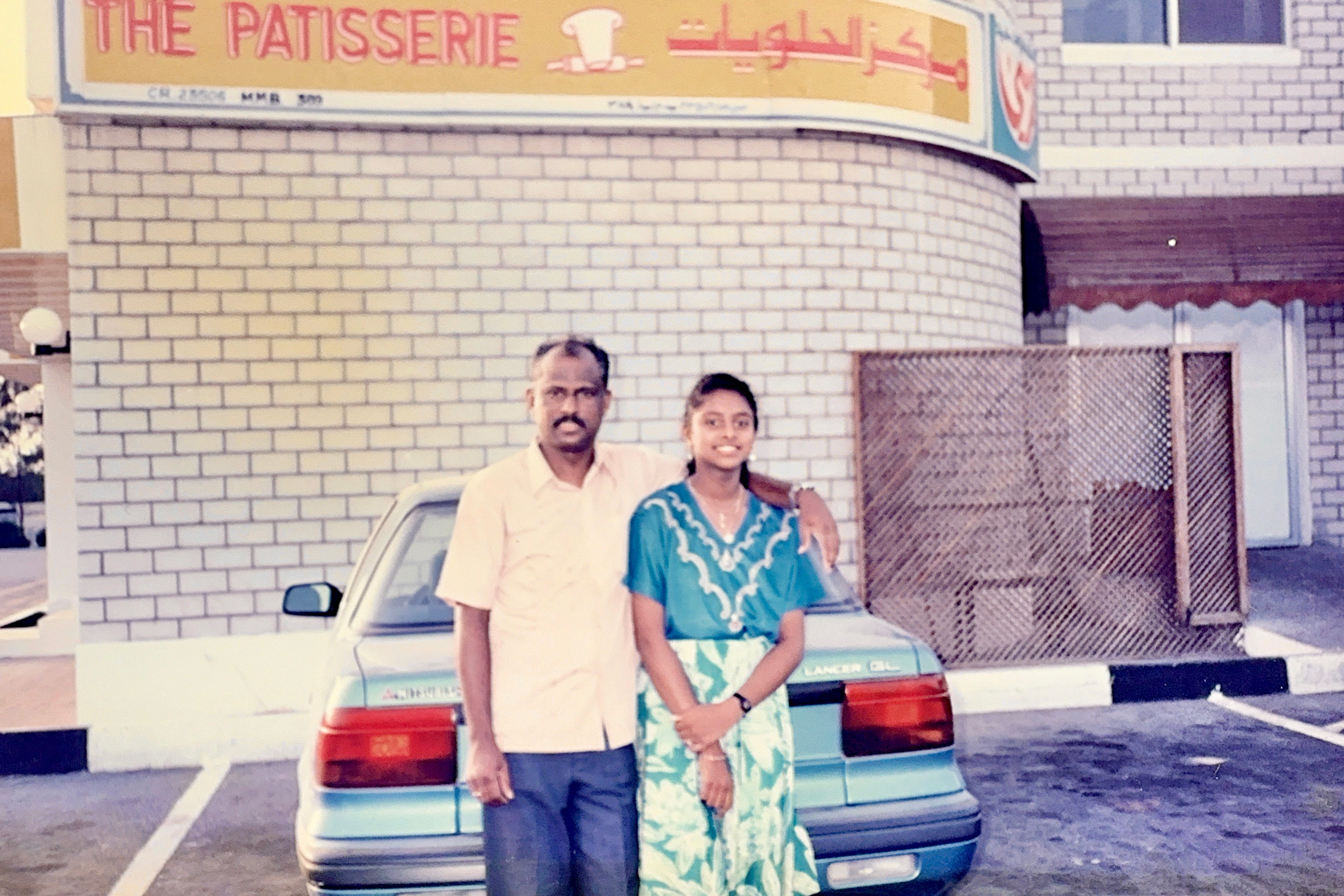
In that time, my “home” had shifted. New roots, albeit tiny, had grown in Chennai; new memories had been created, and new relationships were built, and every flight to and fro got harder.
As a child growing up in the Middle East, every summer my parents faithfully took me back to India. They wanted me to retain those familial connections. Every summer from early childhood to my early teens was filled with memories of playing at my grandmother‘s homes, hot summer days playing in the front yard of my uncle’s house with my cousins under the shade of the jackfruit tree, trips to the beach, catamaran rides, Sundays at church where my mother dressed me and my cousins in identical frocks, long summer evening spent watching Wimbledon, playing hide and seek on the stairs and the terrace and everywhere around the house and those formative years shaped me deeply. Those memories were also Home.
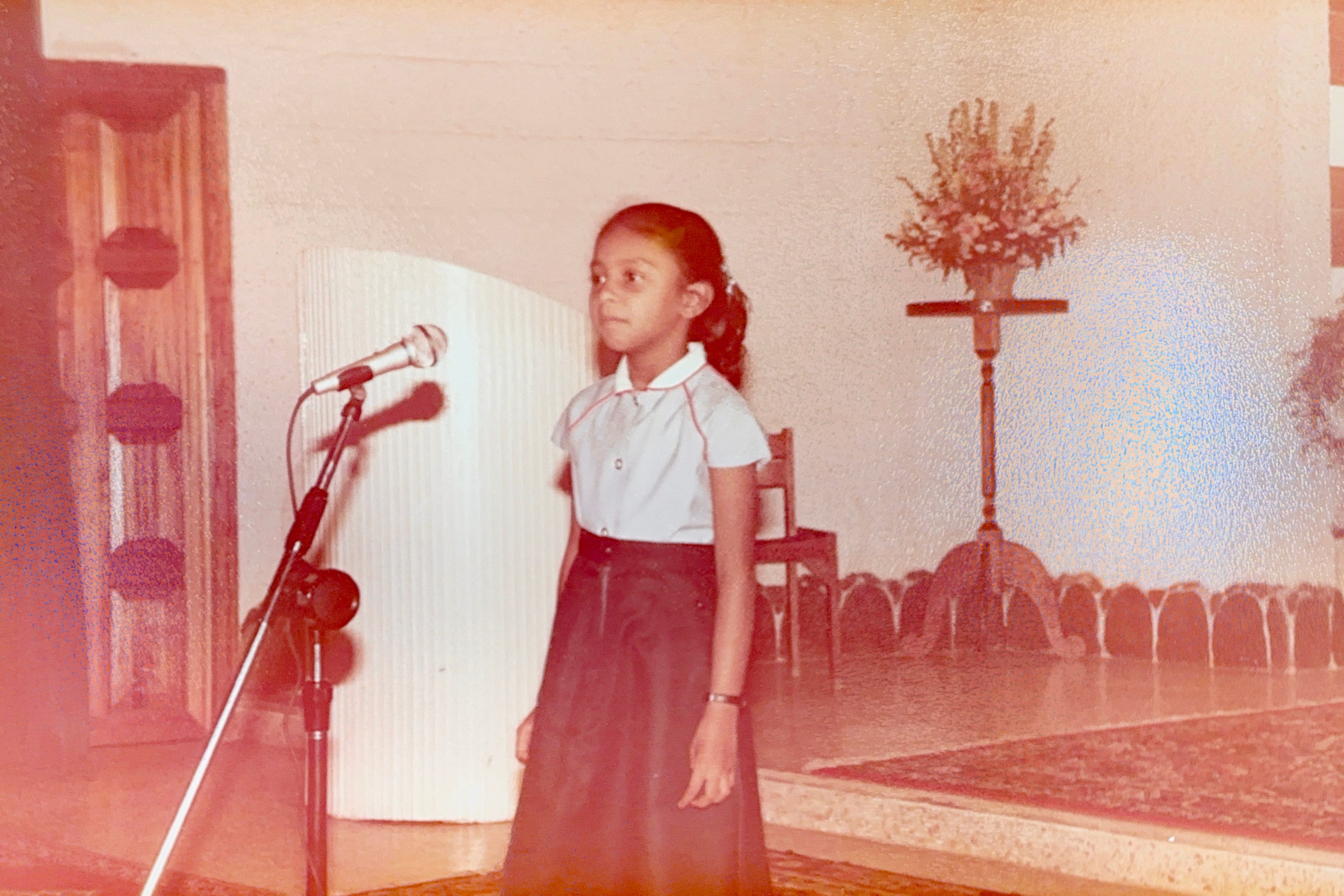
As I went through my university years, Home changed, and the goodbyes started to come a little easier. I was old enough to understand that one could still stay connected through the art of writing letters and the occasional long-distance phone call. Still, the awareness of figuring out my place in this big world was starting to be constructed in my head and my heart, and then, just around the time that Home started to be solidified in India, destiny, or choice, took us to the United States.
I once again began unpacking what Home meant.
My husband and I have created a home for our children. We have lived in the same town for almost 2 decades, built long-lasting relationships and friendships, and these days, when we travel to India, I have to consciously shut down the part of my brain in Dallas, Texas: a temporary choice to be fully present with my people in India.
Travel to India in the early 2000s with young children used to be hard and complicated: jet lag, illness, trying to meet as much family as we could in the short time we had all made for chaotic summer holidays.
I didn’t realize until much later in life that sacrifice helped my children and me to maintain a connection, albeit a fragile one, to my original roots.
Perhaps the people I left behind there would not see it that way, but I needed the connection.
And those connections were hard. I was reluctant to walk back into them. I had changed; would I be accepted?
When the boundaries of what Home is start to shift, we have to choose how we show up. We have to choose graciousness, joy, and gratitude in every interaction. Some relationships can handle the distance; others are fragile, and one needs to tend to them with gentleness.
Living a bifurcated life is complicated today as an empty nester. The concept of Home is now growing the next layer. Our children are grown and are navigating their lives and future.
Staying connected on a global scale requires patience, a sense of humour and really good data! WhatsApp, FaceTime and iMessage all coexist happily on my phone. Familiarity with time zones, language changes, and speaking styles all move fluidly through my being. Some days it’s heartwarming, others exhausting.
Belonging often feels complicated, but the truth is the same for all of us: it’s never guaranteed by geography.
There is no place like Home, but trying to understand where Home is for each of us can be challenging. Not everyone has a safe place to return to where there has been minimal upheaval. Some of us come from generations who never left the safety of our childhood homes and so never had to create a new one.
It has been the hardest part of my journey as a TCK. I have had to create those new safe spaces of Home over and over for myself and my little family. When I was scared, confused, and lonely, I did not always have a place to run to. I had to create it.
If you were one of the few for whom childhood and adulthood have remained in the same spaces and you have been able to not only preserve but also pass it on to the next generation, you are one of the fortunate ones. You have had stability.
Assimilation has been the natural part of my existence. My Home isn’t fixed to the soil of one nation. Neither the comfort that I find in a system of life, nor questioning my identity and loyalty to a people group, is what Home is to me - It is just a rhythm metabolized through time. I know who I am, but that is also fluid based on where I am.
There will always be those who question my choices and decisions, but that does not define me.

In 2009, I spent eight weeks in India with my then two- and six-year-old. We were on summer vacation as a family, and my husband returned after two weeks to the United States. I went on to spend the majority of that trip in my husband’s childhood home with his parents and extended family and also made a quick trip to visit my parents in the Middle East. Two months was a long time, and we fell into a rhythm of life. It had stopped being a holiday and became routine: ordinary days, breakfast, lunches, afternoon naps, a quick trip to the beach with the children every evening, church on Sunday, plenty of quiet evenings. It was a fun time but also hard; I often wondered whether staying for this long had been the right decision. When it came time to return to Dallas, I remember the tears on the faces of my in-laws as they dropped us off at the airport. I remember them because I felt the same tears on my face. It was hard to say goodbye; what started as summer holidays ended up becoming home for that season. Ordinary life had turned precious.
Over the years I’ve often envied those who have had remarkable stability with regards to their family - living close enough to see your parents regularly, close enough to siblings and extended family that you could gather together often. Their sense of Home has never been challenged or shifted.
One could argue that my life has also been tremendously stable; 20 years in the same town. Still, it was a choice we made, and we have tried to maintain distance relationships as best as we can. Not always easy and often squeezed into short trips, creating new memories. The cost is hard.
Nostalgia hits when you return, and then you do it all over again the following year. Some relationships stay strong and even thrive; others flounder and flail, and some are irrevocably broken.
So I have to ask myself - where is my Home?
Is Home Oman, where my childhood memories were formed? Is it in the 5 daily calls to prayer I grew up hearing from mosques in Muscat? Is it memories of running on the Corniche with my friends watching the waves hit the breakers or the tangy, sweet, salty taste of Chips Oman?
Is Home, Chennai, where I am lying on the bed reading Reader’s Digest with my granny, playing on the terrace on hot summer afternoons, playing with my cousins, eating sticky jackfruit, or having our uncle take us for milkshakes after the midnight New Year’s Eve service? Train trips to Ooty and Kodaikanal where we slept in dorms and took boat rides where everyone pedaled. A place where I can hear my mother’s voice teasing my father or reminding me to dry my wet hair. Where I can see her roll her eyes and her expressive eyebrows.
Is Home, Dallas, where everywhere I turn I see the memories of my children, riding bikes, in the playground, at school, summer trips to 7/11, McDonald’s, Chick-fil-A, and all the adventures of air travel over the decades. We have lost count of the flights we have taken and the number of suitcases packed, unpacked, and weighed.
Could my home be my husband’s home, Tuticorin, where I have memories of the ones who loved me dearly as I joined their family, where I not only was adopted as a daughter-in-law but also got to meet and love the entire extended family who have been so wonderful to me over the years.
Will my home be the place where I do not need to don a disguise? Which home allows me to be wholly me and not reluctant to show my real self?
To say “there is no place like home” only makes sense to me when Home has always been grounded, rooted in one steady place for generations. There is a lot of good in that. Life in multiple places can stretch the heart and emotions. There are tears every time I leave Chennai and tears when I land in DFW.
For me, Home is a complicated place of searching for belonging, faithfully trying to maintain relationships, trying to be fully me, and living wholly wherever I find myself. Despite the moments of doubt and sadness, I am truly grateful for this journey I find myself on. I do not know where my Home is.
But for now, Home for me will always be where my heart is.
You're always trying to teach me new words....Bifurcated. Got it!
Each and every sentence in this article resonates with me and thousands of others who left their homes for other countries and places.